Start With Ceiling Height
Lower warehouse ceilings may need lower-output fixtures or closer spacing. Taller ceilings usually need stronger LED high bays, wider planning, and a closer look at rack shadows.
Warehouse LEDs helps commercial customers choose and install LED lighting for warehouses, storage buildings, logistics centers, distribution facilities, and industrial work areas. The right plan depends on ceiling height, rack layout, fixture count, voltage, operating hours, and how the building is used.
Every existing building is different. The walkthrough reviews fixture type, ceiling height, current brightness, access, maintenance issues, and how employees use the space.
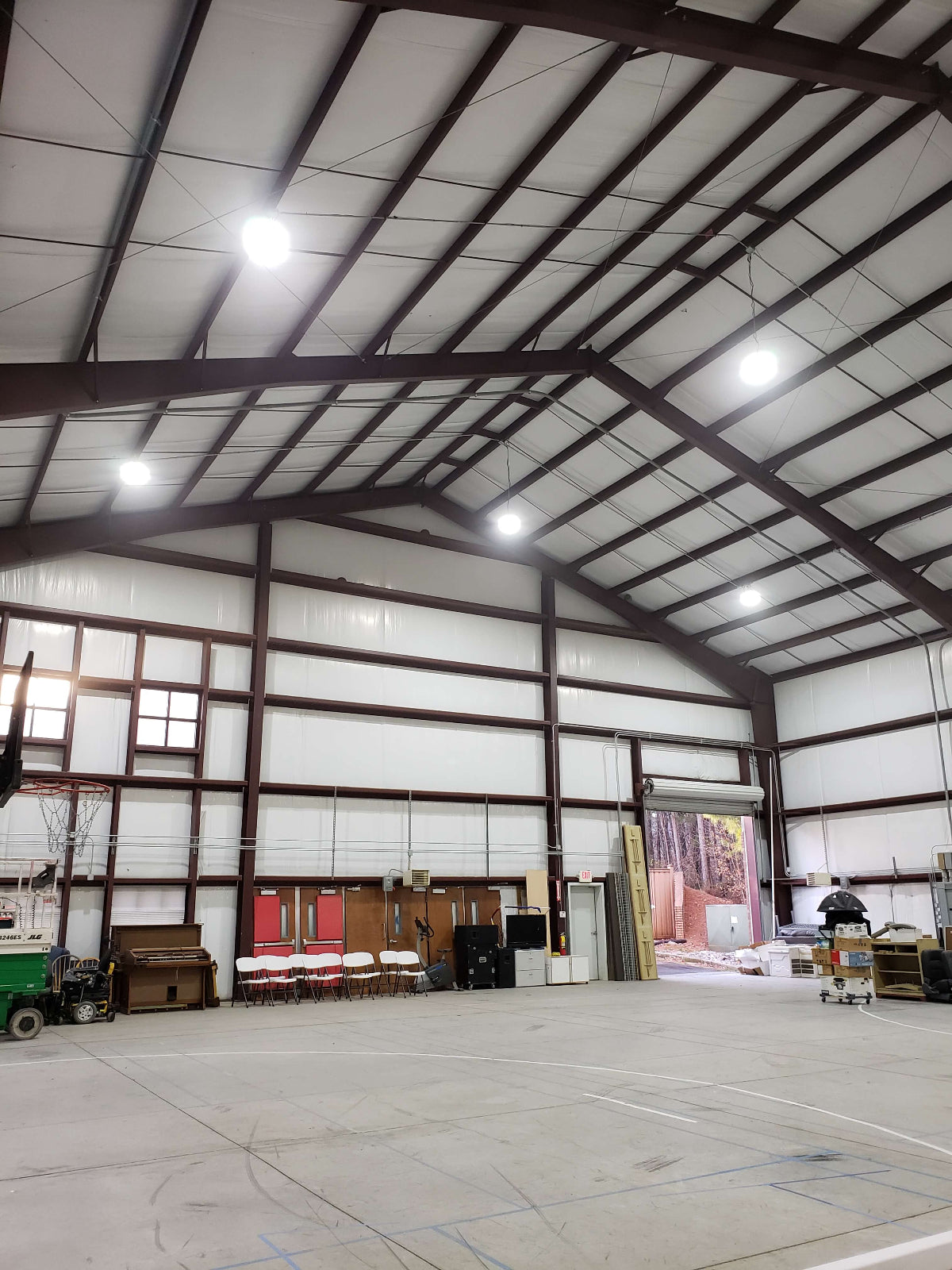
Good lighting is easy to notice in person: brighter work areas, cleaner ceilings, safer movement, and a building that feels easier to operate.
Request a Free WalkthroughGood warehouse lighting is not just buying a bright fixture. The best result comes from matching light output, beam spread, mounting height, fixture spacing, and controls to the way the warehouse actually operates.
Lower warehouse ceilings may need lower-output fixtures or closer spacing. Taller ceilings usually need stronger LED high bays, wider planning, and a closer look at rack shadows.
Linear LED high bays often fit aisles, racking, and rectangular coverage needs. UFO high bays can fit open warehouse bays, shop floors, gyms, and wide work areas.
A one-for-one LED replacement can be efficient when the old layout is already good. If the warehouse has dark aisles, glare, or uneven coverage, the layout should be reviewed before fixtures are ordered.
Forklift routes, dock doors, packing areas, storage aisles, offices, electrical rooms, and production zones may need different light levels inside the same building.
Motion sensors can reduce wasted energy in low-traffic aisles and storage zones. Busy work areas need lighting controls planned carefully so the space stays safe and usable.
Warehouse LEDs reviews fixture type, voltage, ceiling height, lift access, failed lights, mounting method, and operating hours before building a practical installation quote.
The fastest way to avoid buying the wrong LED warehouse lights is to walk the building first. Send photos if you have them, then schedule a free walkthrough when the project needs a real fixture count, ceiling-height check, lift-access review, and installation plan.
We look at the current fixtures, ceiling height, mounting style, access, failed lights, work zones, and how the building operates. That keeps the quote tied to the real facility instead of a generic fixture list.
We serve businesses across North Georgia and Metro Atlanta, including warehouses, offices, shops, industrial spaces, and commercial properties near these areas.
These guides help buyers compare fixture types, layouts, savings, and quote details before scheduling a walkthrough.
Short answers for buyers comparing commercial lighting upgrades in Georgia.
Most warehouses use LED high bay lights because they are built for taller ceilings and large open spaces. Linear high bays often work well over aisles and racking. UFO high bays can work well in open warehouse bays, gyms, shops, and production areas. The best fixture depends on ceiling height, rack layout, fixture spacing, voltage, and the work being done below.
A warehouse does not have one perfect lumen number for every building. Storage areas, forklift aisles, loading docks, packing areas, and detailed work zones can all need different light levels. A walkthrough looks at the existing fixture count, ceiling height, aisle layout, dark spots, and current complaints before choosing wattage and fixture output.
Often yes, especially when the old fixture locations already make sense. A one-for-one LED high bay swap can be fast and practical for existing buildings, but dark aisles, blocked light from racking, glare, or uneven coverage may require a layout review before ordering fixtures.
Not always. Motion sensors can help in storage aisles, low-traffic zones, and buildings where lights stay on while areas sit empty. Busy loading docks, production spaces, and high-traffic forklift paths need a more careful controls plan so the lights do not dim when people need visibility.
Yes. Warehouse LEDs supplies fixtures and handles commercial LED lighting installation for warehouses, logistics centers, distribution buildings, manufacturing spaces, shops, and existing commercial facilities across North Georgia and Metro Atlanta.
Commercial lighting projects need clear expectations before work starts. These details cover insurance, fixture warranty, and installation labor support.
Warehouse LEDs carries insurance for commercial lighting installation work.
Insurance documentation can be provided for commercial projects when requested.LED fixtures carry a 5 year manufacturer warranty for long-term product support.
Warranty terms are provided by the fixture manufacturer and can vary by fixture model.Installation labor is covered for 1 year after the project is completed.
Labor warranty covers installation workmanship and does not include lift rental costs.Tell us about your facility and what you want to improve. Call, text, email, or send the form. If a walkthrough makes sense, we will schedule a time to see the space and build a practical LED upgrade plan.
Text photos of the fixtures, ceiling, electrical room, or dark areas if that is easier than filling out the form.
Use your phone flashlight while we calculate your lighting upgrade.